What is a battery energy storage system (BESS)?

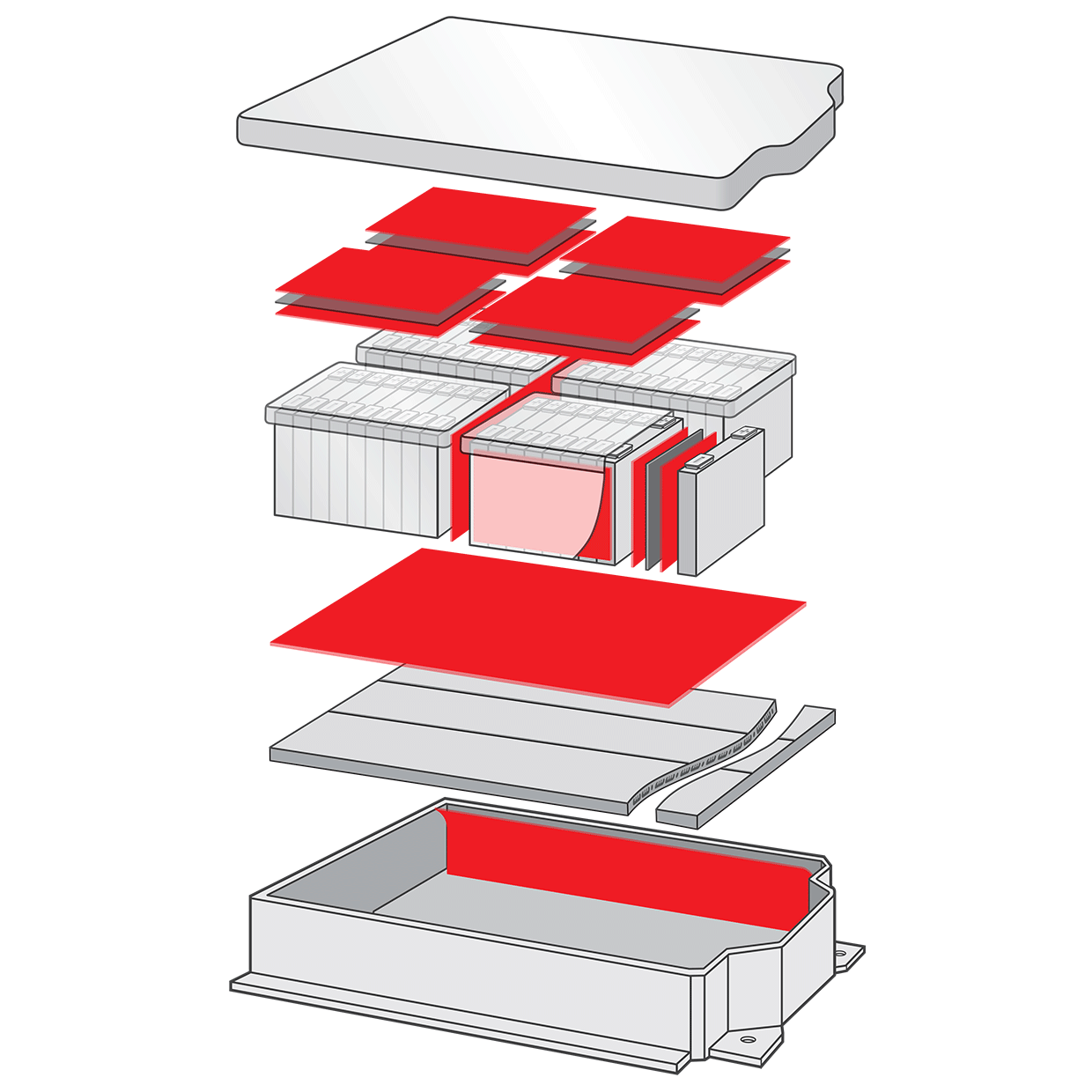
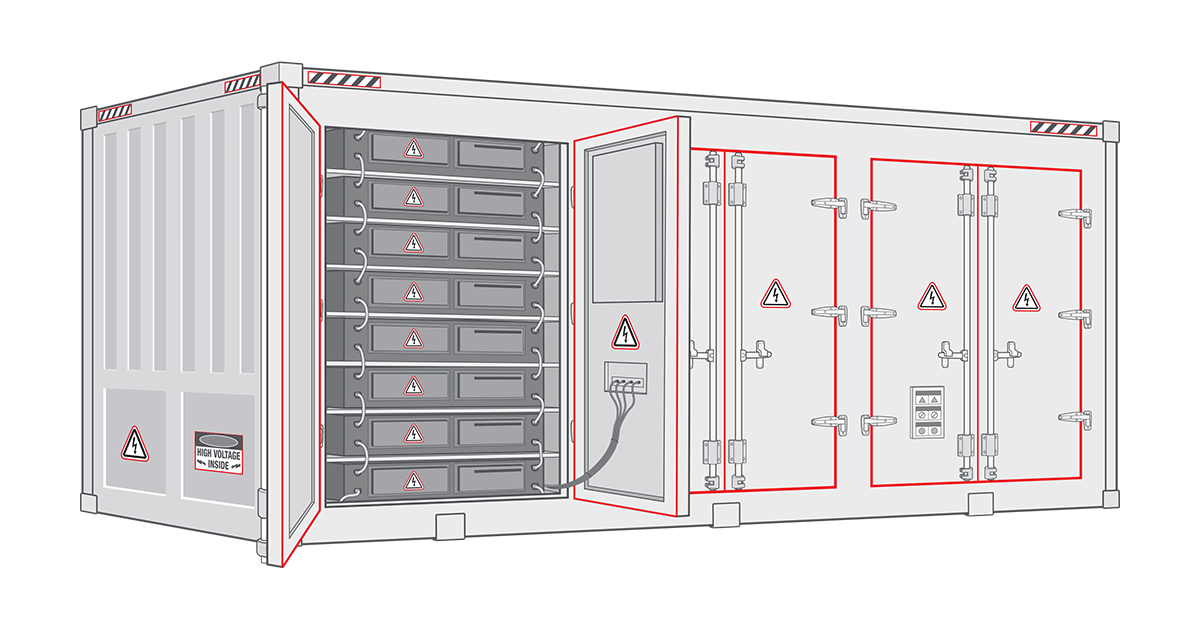
A battery energy storage system stores electrical energy in rechargeable batteries and releases it when the grid or a facility needs it. Most large systems use lithium iron phosphate (LFP) cells grouped into modules, packs and containerized units, from grid-scale installations down to commercial sites. Inside each unit, adhesive tapes bond and insulate the cells, barriers and connections that keep the system safe and stable.

Engineered for the demands of grid-scale storage


Our functional tape portfolio addresses the three core material challenges in BESS design, assembly and performance.

Reducing flammability


Acrylic- and rubber-based adhesives with Flame Tough™ flame-retardant adhesive properties allow composites and materials to meet UL®94 V-0 and other flame requirements.

Boosting dielectric strength


Single-coated Volt Tough™ tapes and double-coated tapes which incorporate dielectric films. Our materials and adhesives are tested for breakdown voltage and dielectric strength requirements using GB/T 1408.1-2016 and ASTM D3755 test methods.

Optimizing design and assembly


Functional tapes can replace liquid adhesives and mechanical fastening methods while offering a thinner profile, lighter weight, repositionability and instant bond.


Thermal runaway protection that works in production

Battery energy storage systems (BESS) face a critical challenge: thermal runaway propagation between cells can cascade through entire modules in seconds. Thermal barriers, mica sheets, aerogel pads and ceramic paper are the proven solution, but these materials are fragile, shed fibers or crumble during handling and assembly.

  • Flame Tough™ pressure-sensitive adhesives (PSA) encapsulate and bond thermal barrier materials for BESS applications:
  • Mica sheet bonding:  Adhesive tapes designed to bond sheet mica securely, with release liners that remove cleanly without damaging the mica
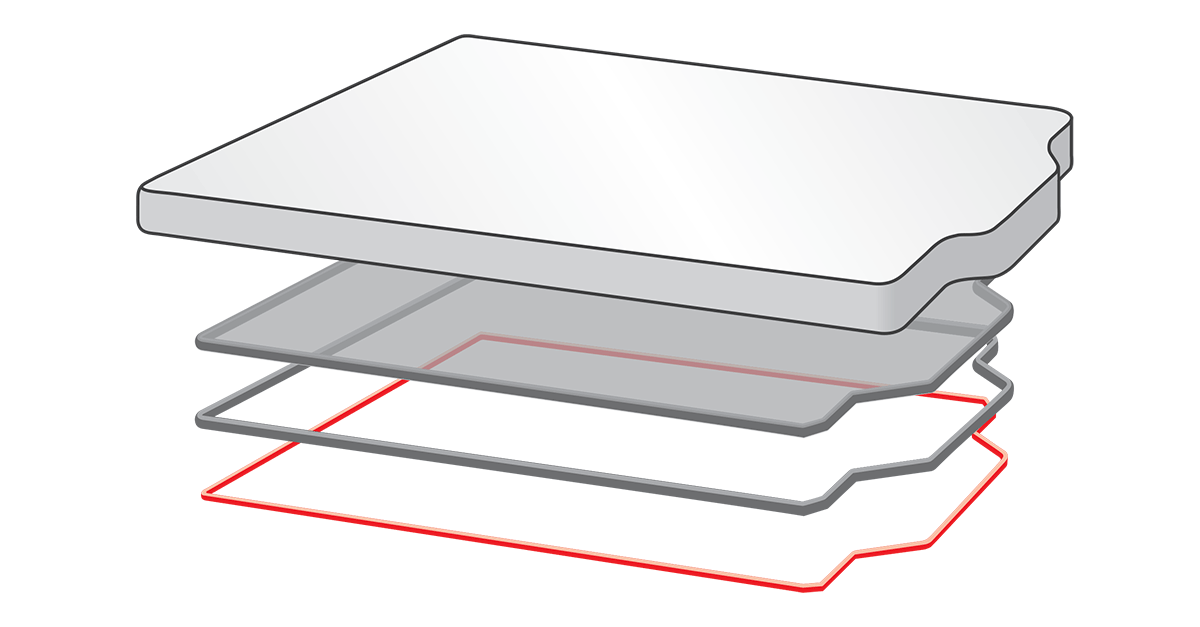
  • Aerogel pad encapsulation and bonding: PSA-encapsulated aerogel pads delay thermal propagation from 368 to 1,294 seconds in independent testing, securing fragile barriers without damage or particulate contamination
  • Ceramic paper mounting: Encapsulates fiber-shedding ceramic paper to prevent particulate contamination in cell assembly
  • UL® 94 V-0 flame tested: Acrylic and silicone PSA chemistries tested to meet fire safety requirements
  • Temperature resistance to 220°C: High-temperature grades maintain adhesion through normal operating ranges and thermal cycling

Unlike liquid adhesives that require mixing, dispensing equipment, and cure time, PSA tapes deliver instant bonding for automated assembly lines. Die-cut precision eliminates waste and enables camera/vision system detection with colored variants.

Dielectric insulation for high-voltage battery systems

BESS modules routinely exceed 1,000V DC, creating arcing risk between cells, busbars, cooling plates and module housings. Electrical insulation failures can trigger short circuits, thermal events and system shutdowns.

Volt Tough™ dielectric tape solutions provide high-voltage protection throughout battery energy storage systems:

  • CTI 600V rating: Material Group I classification per IEC 60112 for compact BESS designs with minimal clearance distances

  • Dielectric strength >200 kV/mm: Tested per ASTM D149 and GB/T 1408.1-2016 for global supply chain compliance

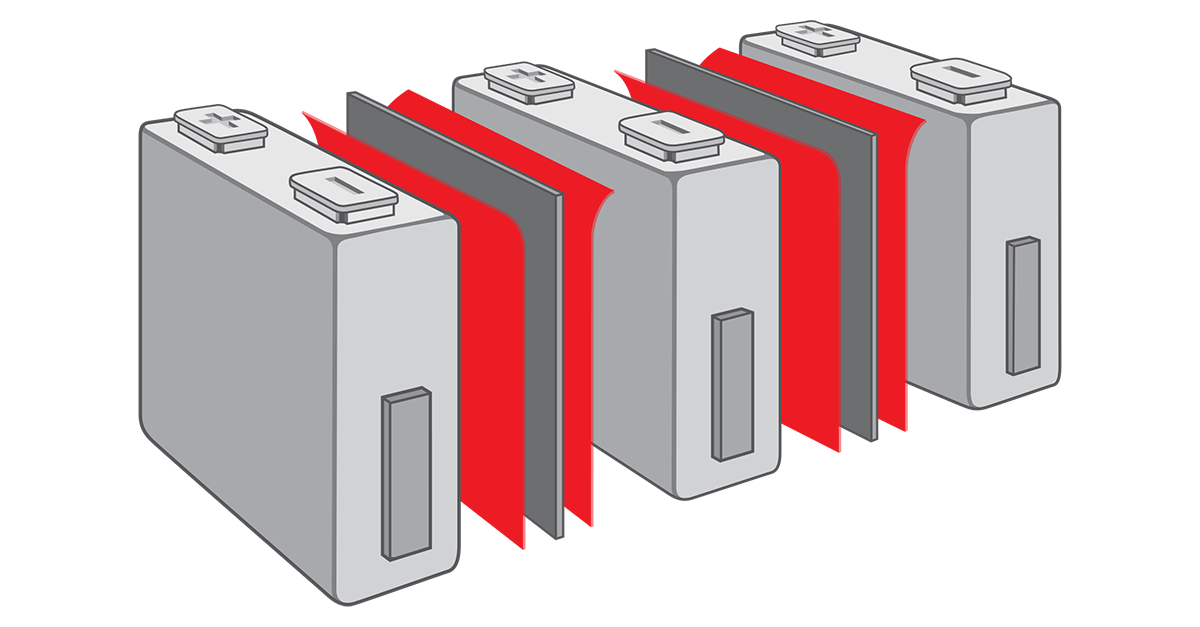
  • Cell insulation: Can prevent shorts between prismatic LFP cells in high-density pack configurations

  • Busbar and cell connection insulation: Insulates high-current connections in module and pack assemblies

  • Cooling plate isolation: Electrically isolate conductive thermal management components from cell contact surfaces

  • Temperature range -40°C to +150°C: Stable dielectric properties across BESS operating conditions

PET-based constructions provide the optimal balance of dielectric strength, dimensional stability, and cost-effectiveness for utility-scale installations. For applications requiring high-temperature performance and electrical insulation, we offer specialized constructions that address the CTI limitations of standard polyimide films.


Assembly efficiency: PSA tape advantages for BESS manufacturing

BESS manufacturers face aggressive timelines, automation requirements and cost pressures. Material selection directly impacts throughput and total cost of ownership.

PSA tape vs. liquid adhesive vs. mechanical fasteners

Instant bonding with no cure time

  • PSA tapes bond on contact with pressure activation
  • Liquid adhesives require significant cure cycles before handling
  • Mechanical fasteners add more mass, space and assembly steps

Automated assembly compatibility

  • Die-cut tape components integrate directly into robotic pick-and-place systems
  • Liquid dispensing requires dedicated equipment, mixing controls and quality checks
  • Mechanical fasteners require tooling changes when the design is modified.

Dimensional precision for tight tolerances

  • Laser die-cutting delivers ±0.1mm accuracy for cell wrapping and barrier placement
  • Liquid adhesive beads vary in thickness and will ooze if sufficient material is applied
  • Mechanical fasteners create stress concentration points

No volatile emissions or mixing equipment

  • PSA tapes are ready-to-use, solvent-free solutions
  • Two-part liquid adhesives require ratio control, pot life management and may require ventilation systems
  • Mechanical assembly can create pinch points and may require multiple different parts

Supply chain simplification

  • Single SKU per application with guaranteed shelf life
  • Liquid systems require separate resin, hardener and dispensing consumables
  • Fastener assembly requires matching hardware, washers and thread-locking compounds

Safety standards for evolving BESS regulations

BESS safety standards continue to tighten following high-profile thermal events. NFPA 855 now mandates Hazard Mitigation Analysis (HMA) for nearly all installations, while UL® 9540A has introduced stricter test requirements in its latest edition.

Our BESS tape solutions meet critical industry standards:

  • Flame-retardant tapes help maintain flammability ratings for multi-material solutions

  • UL® 9540A thermal runaway test method compliance can be unlocked by laminating multiple thermal barriers together to support system-level fire safety testing at cell, module, unit and installation scales

  • NFPA 855 material selection requirements - Flame-retardant constructions that address prescriptive requirements for materials in direct contact with energized battery components

  • IEC 60112 comparative tracking index (CTI) - Volt Tough™ tapes achieve Material Group I classification (CTI ≥600V) for high-voltage applications with minimal creepage distances

  • ASTM D3755 dielectric breakdown voltage - Tested insulation performance for voltage ratings relevant to utility-scale BESS systems exceeding 1,000V DC

Tape selection by application

For thermal runaway protection:

  • Cell-to-cell thermal barriers: Flame Tough™ acrylic PSA for aerogel encapsulation and thermal barrier bonding in prismatic LFP cell modules

  • Inter-module fire barriers: High-temperature PSA with ceramic paper or intumescent materials for pack-level protection

  • Vent path sealing: Flame-retardant tapes with pressure-sensitive adhesive for controlled thermal event gas management

For electrical insulation:

  • High-voltage cell wrapping: Volt Tough™ PET film tape with acrylic adhesive, CTI 600V, dielectric strength >200 kV/mm

  • Busbar and cell connection electrical insulation: Polyester film tape with rubber adhesive for irregular surfaces and high-temperature exposure

  • Component isolation: Die-cut insulation pads for cooling plates, module frames, and conductive structural elements

For compression and gap filling:

  • Cell swelling management: Flame-retardant polyurethane foam with acrylic PSA, multiple densities for pouch and prismatic cell formats

  • Module-to-housing sealing: Closed-cell foam tape with weather-resistant adhesive for containerized outdoor BESS installations


Engineering support and technical resources

Our applications engineering team provides material selection guidance, die-cut design optimization and testing support for BESS applications.

  • Product specifications and test data for thermal, electrical and mechanical properties

  • Die-cutting and converting partner network for prototype and production volumes

  • Thermal runaway barrier encapsulation design guide

Contact our BESS solutions team

Whether you're designing next-generation utility-scale storage or optimizing existing battery pack assembly processes, our team can help you select the right PSA tape solutions.

Request technical consultation:

  • Thermal barrier bonding and encapsulation solutions

  • Dielectric tape selection for high-voltage insulation

  • Die cut component design for automated assembly

  • Domestic content verification for IRA compliance

  • Custom product development for specialized BESS applications


Featured products

ES 1421 Blue

ES 1421 Blue

2 mil clear biaxially oriented polyethylene terephthalate (BOPET) with blue pigmented acrylic adhesive. The adhesive provides electrolyte resistance/compatibility. This product is intended as electrical insulation for prismatic and cylindrical cell wrapping for energy storage and electric vehicles.

Key benefits
  • Clear facestock with blue adhesive for application indication and aesthetic requirements
  • Acrylic adhesive with excellent aging resistance and shear strength
  • 2 mil PET facestock provides electrical insulation (>8 kV AC Breakdown Voltage)
  • Made in US for Inflation Reduction Act compliance and local North American cell production

ES 1421 Yellow

ES 1421 Yellow

2 mil clear biaxially oriented polyethylene terephthalate (BOPET) with yellow pigmented acrylic adhesive. The adhesive provides electrolyte resistance/compatibility. This product is intended as electrical insulation for prismatic and cylindrical cell wrapping for energy storage and electric vehicles.

Key benefits
  • Clear facestock with blue adhesive for application indication and aesthetic requirements
  • Acrylic adhesive with excellent aging resistance and shear strength
  • 2 mil PET facestock provides electrical insulation (>8 kV AC Breakdown Voltage)
  • Made in US for Inflation Reduction Act compliance and local North American cell production

ES 3505

ES 3505

Specially designed, high-quality PET material with good fire resistance and insulation properties. Features a permanent, acrylic-based adhesive.

Key benefits
  • Excellent die-cut, peel properties, and excellent sealing properties
  • Specially designed high-quality PET material with good fire resistance and insulation properties
  • Excellent tear resistance, high temperature resistance, and dimensional stability
  • Suitable for various insulation applications
  • Exceptional resistance to corrosion

FBA 8960

FBA 8960

FBA 8960 is a 4.0 mil double-coated polyester with a modified acrylic adhesive. It bonds well to low surface energy materials and has good foam bonding properties.

Key benefits
  • Dimensional stability and good die cutting characteristics
  • Strong bond to low surface energy materials and good foam bonding performance
  • Good heat resistance

FM 2333

FM 2333

FM 2333 is a 36 mil double-coated white polyethylene foam with a modified acrylic adhesive. Bonds well to low surface energy materials and can fill gaps. Commonly used in general industrial foam applications.

Key benefits
  • Dimensional stability and good die cutting characteristics
  • Strong bond to low surface energy materials
  • Good heat resistance
  •  Gap filling properties and good conformability
  • High tensile strength and tear resistance with excellent die cutting performance


Frequently asked questions (FAQ) about BESS tape performance


  • Can your tapes withstand the thermal cycling conditions typical of utility-scale BESS installations?

    Yes. Our pressure-sensitive adhesive tapes are formulated to maintain adhesion and dimensional stability across the full BESS operating range of -40°C to +150°C. High-temperature grades are rated to 220°C for applications near cell venting zones or thermal management components subject to repeated cycling.

  • How do PSA tapes perform in humid or outdoor containerized BESS environments?

    Outdoor and containerized installations introduce moisture, condensation and temperature swings that can degrade standard adhesives over time. Our closed-cell foam tapes and weather-resistant constructions are selected specifically for module-to-housing sealing in these environments, providing long-term adhesion without corrosion risk or seal degradation.

  • Do your BESS tape solutions support domestic content requirements under the Inflation Reduction Act?

    The majority of our BESS tape solutions are U.S.-manufactured, which can support your compliance documentation for domestic content verification. Our applications engineering team can provide the relevant country-of-origin documentation needed for project-level compliance reporting.