
Bonding study: WT Burnett polyurethane foams
Determining the correct adhesive when bonding to foam and other materials may be challenging, especially when seeking to provide your customer an accurate quote quickly and accurately. To help you with the adhesive selection, and the technical requirements your customer may require, Avery Dennison Performance Tapes has developed a series of adhesive bonding studies. These studies highlight the performance of our Core Series™ Portfolio products when combined with foams and other materials from industry leading manufacturers.
Bonding to WT Burnett polyurethane foams
WT Burnett is a specialty foam and non-wovens manufacturer delivering precision-engineered materials and custom solutions for more than 140 years. With a steadfast commitment to quality and innovation, we partner with the world’s leading brands to bring their visions to life and push entire industries forward.
Our technical foams and high-loft non-wovens have been used in products around the world and in nearly every major automotive platform over the years. Our materials are everywhere, quietly performing in products people rely on every day.
WT Burnett polyurethane foams and Avery Dennison adhesive sample preparation
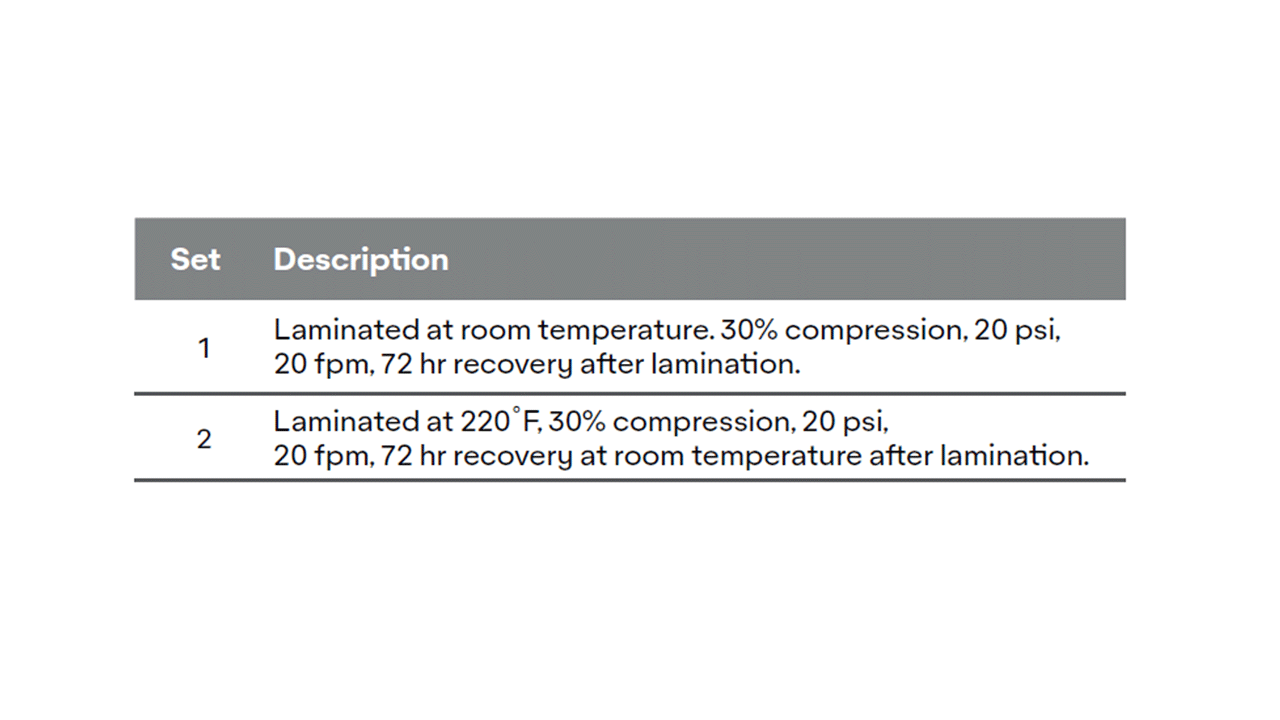
Avery Dennison adhesive products were backed with a 2 mil PET film and trimmed to a one-inch width. Two sample sets were laminated to WT Burnett polyurethane foams.
WT Burnett polyurethane foams and Avery Dennison adhesive sample testing
Foam bonding is affected by the foam's base polymer, thickness, and cell type. Adhesion to foam is impacted by factors such as: adhesive mass, pressure, compression, lamination speed and temperature. All samples were tested at 180° Peel Adhesion at 12 in/min. It was determined by this study that heat lamination is beneficial (220 ̊F).
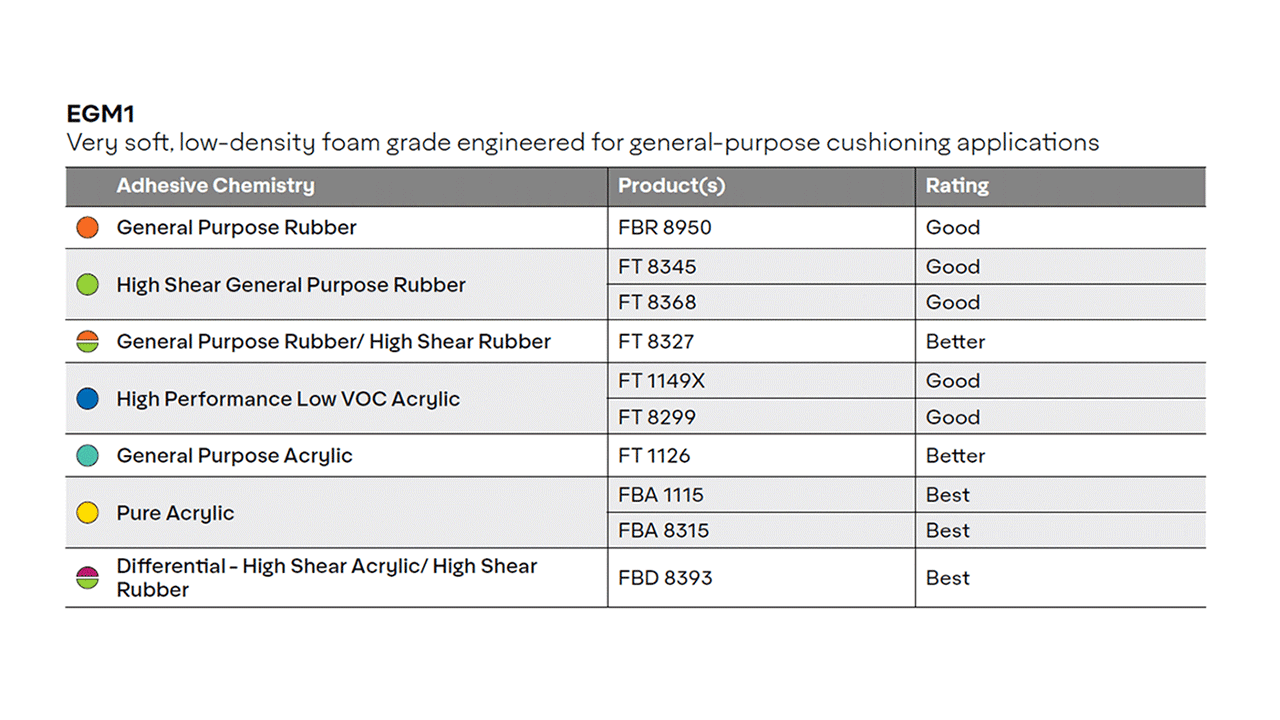
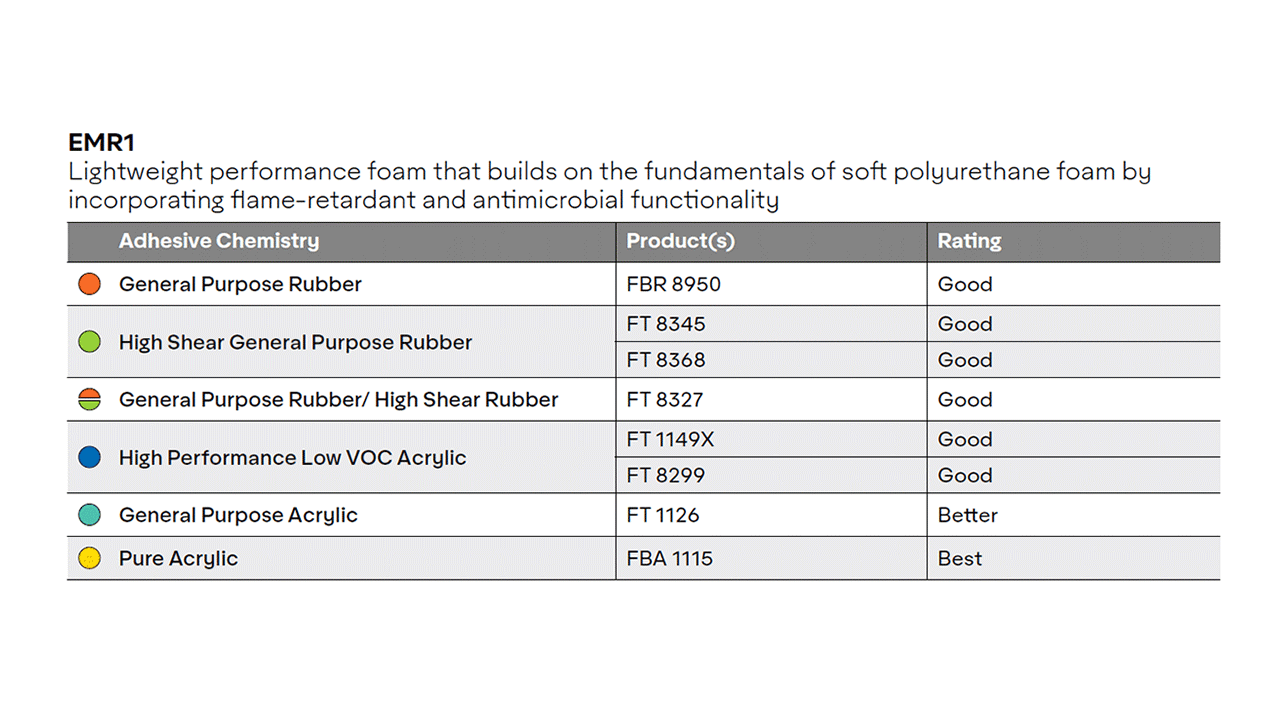
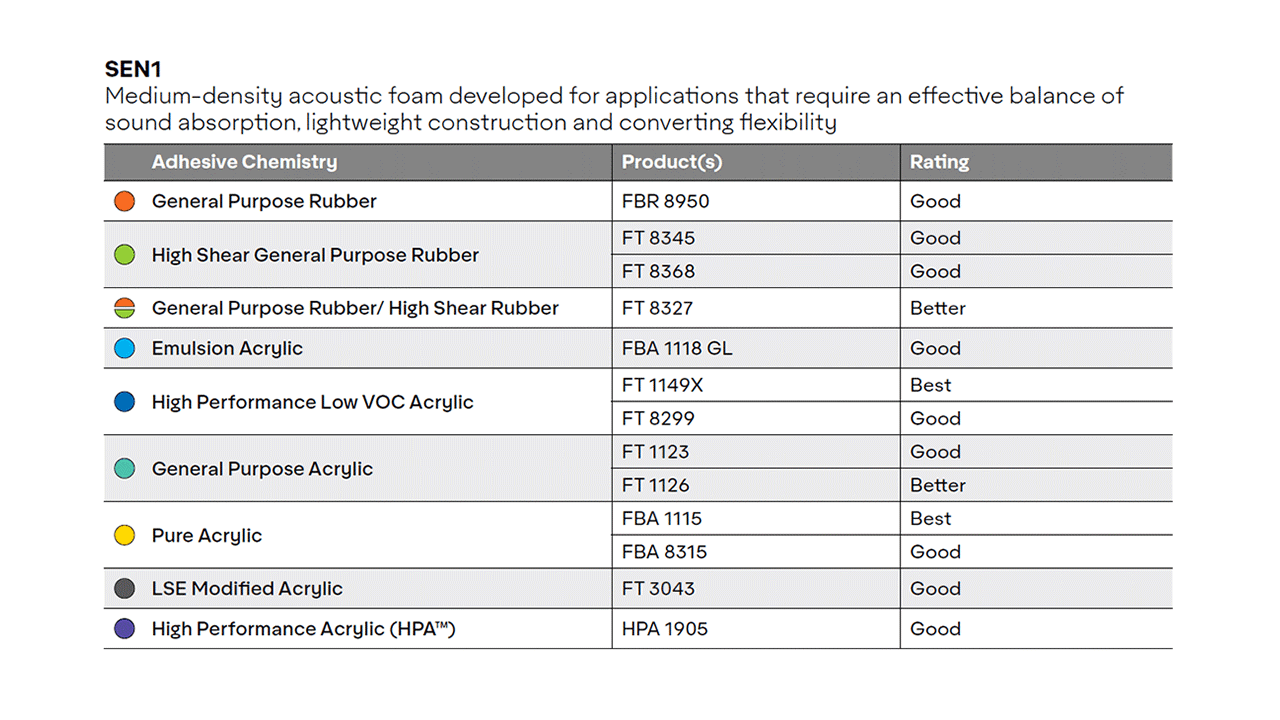
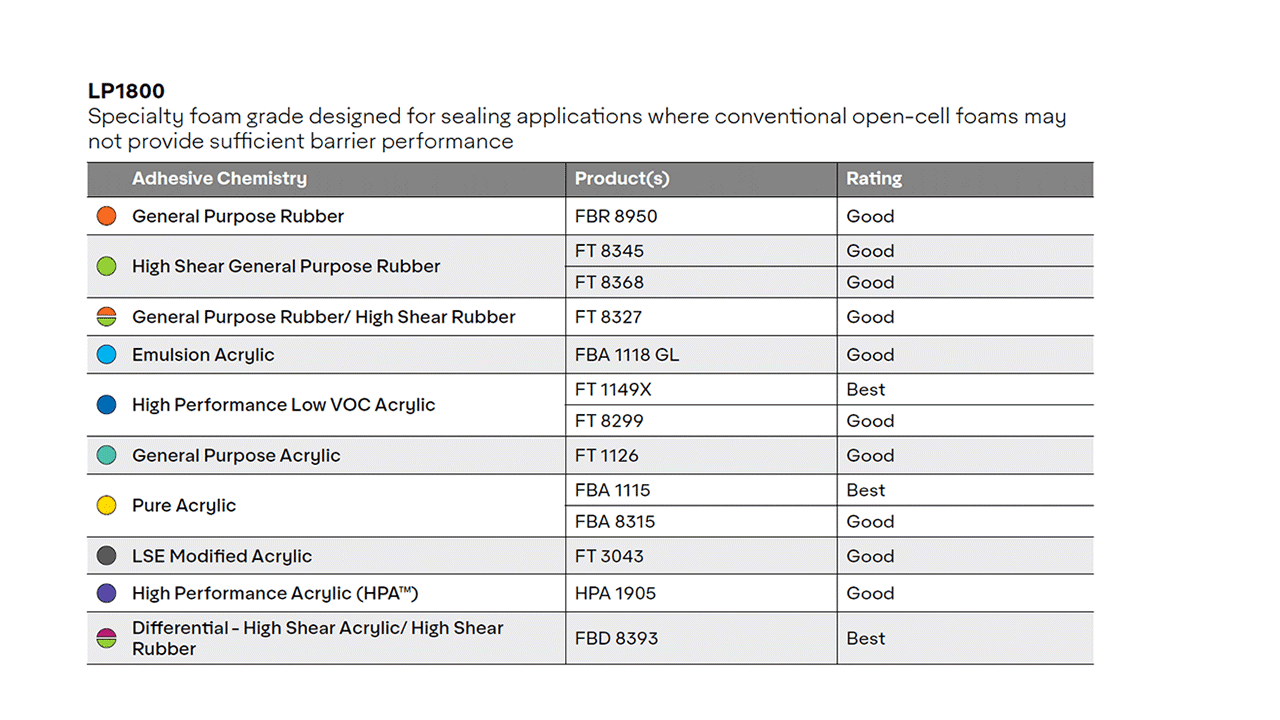
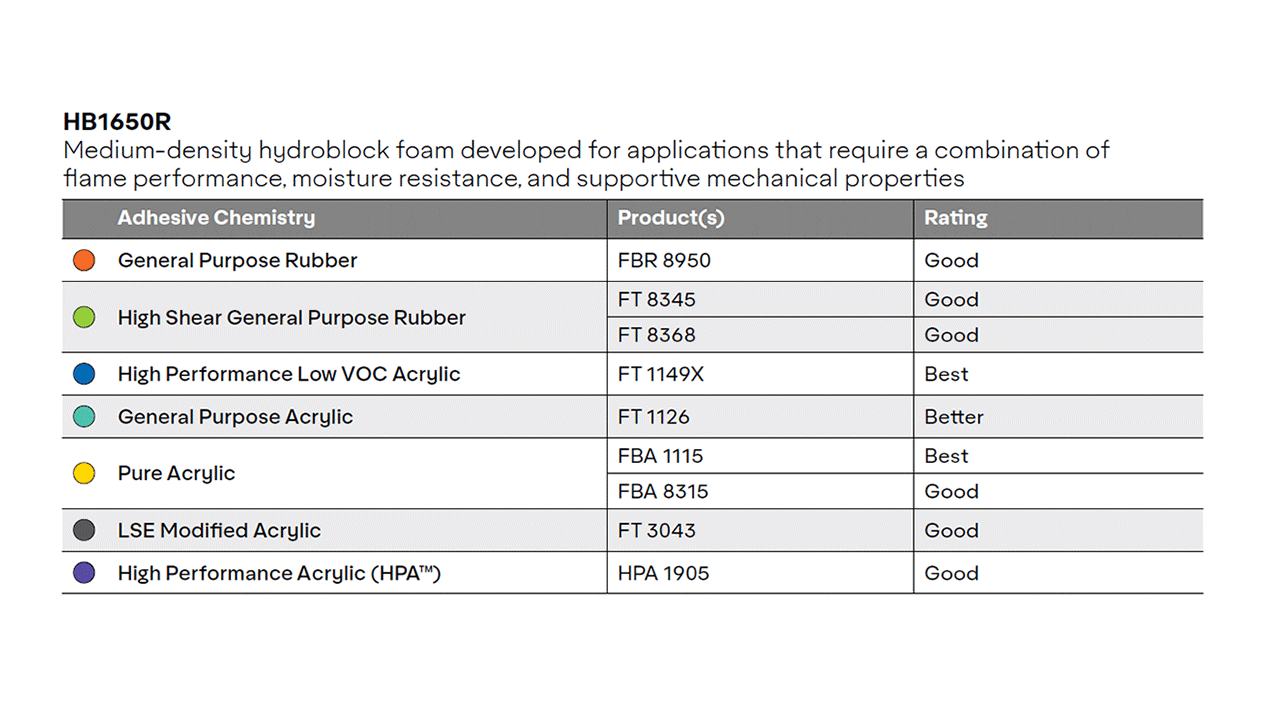
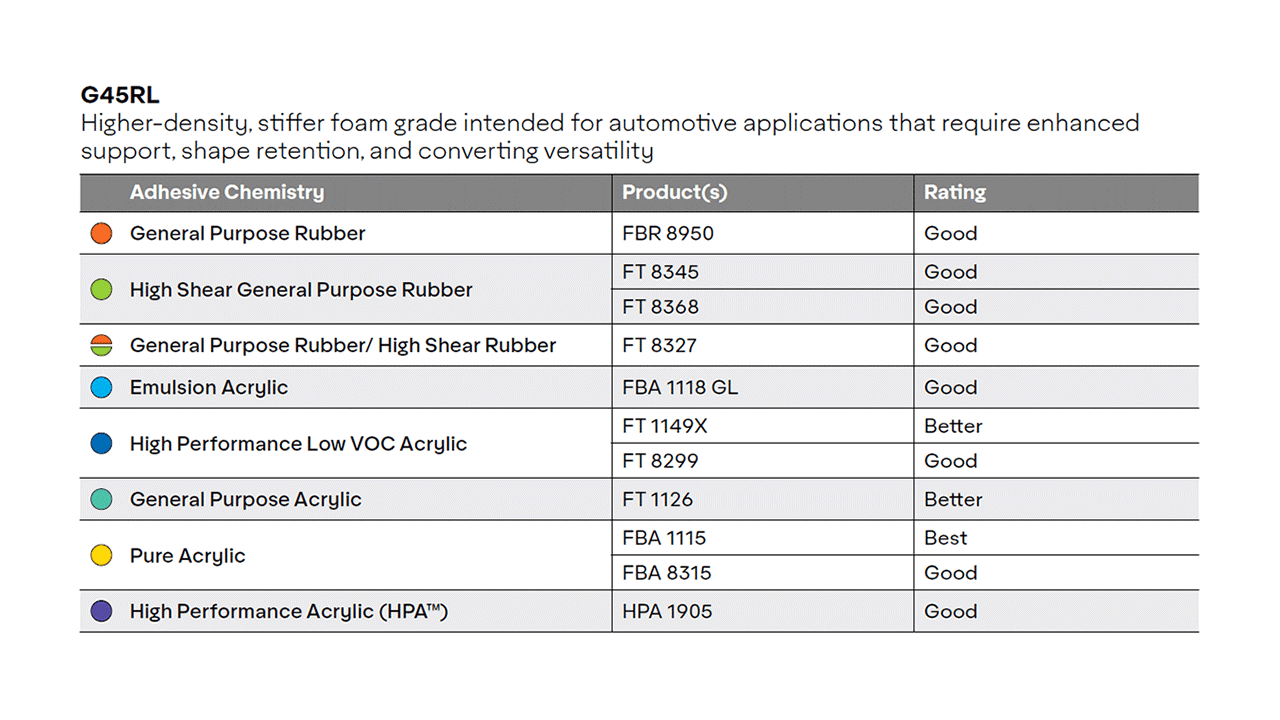
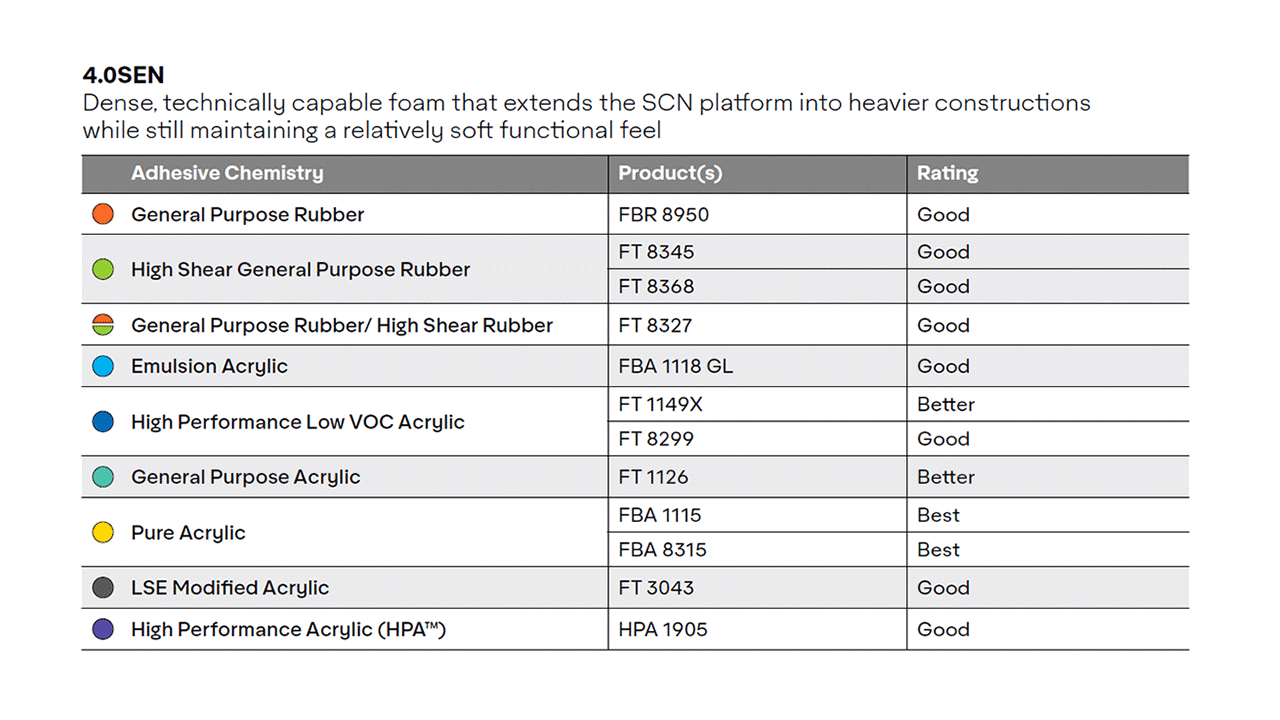
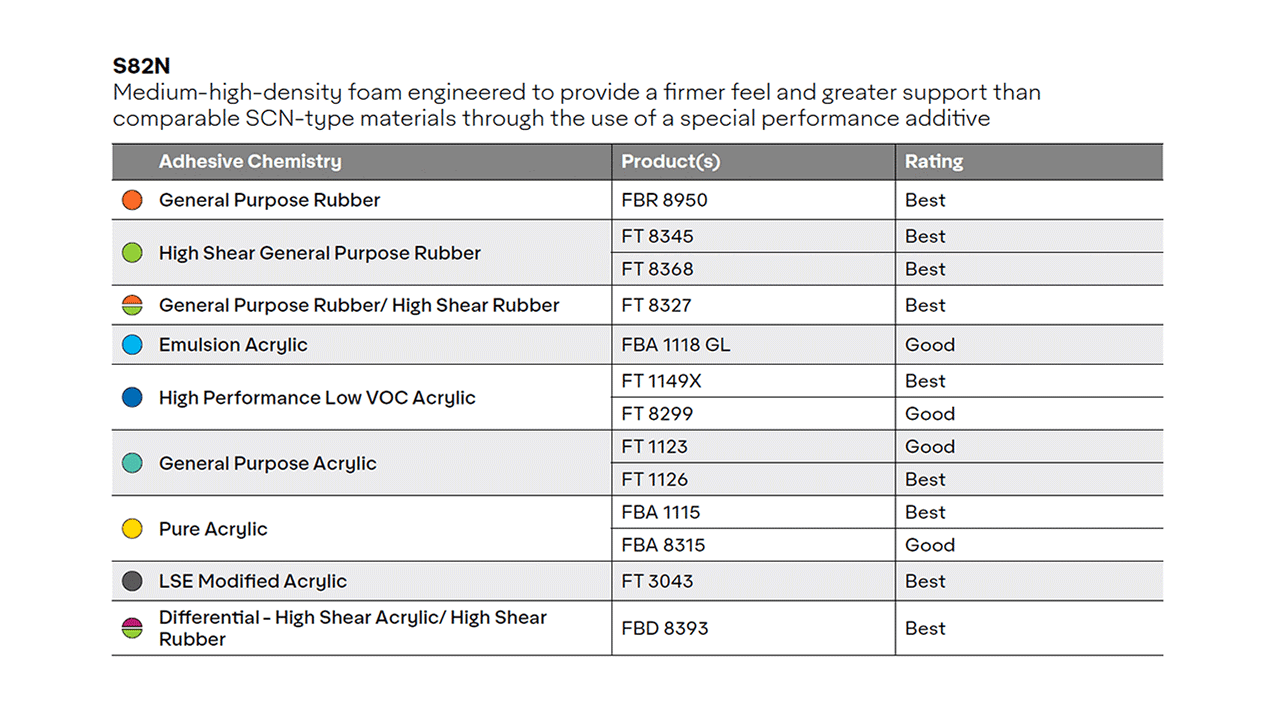
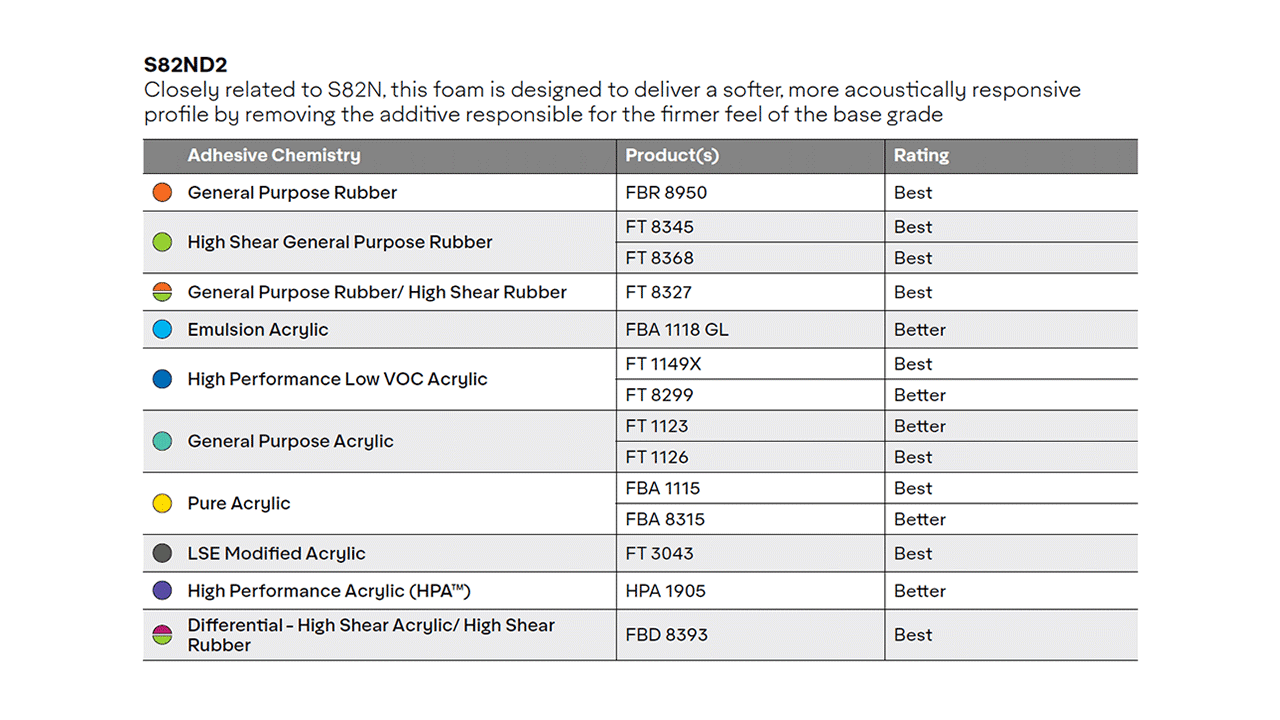
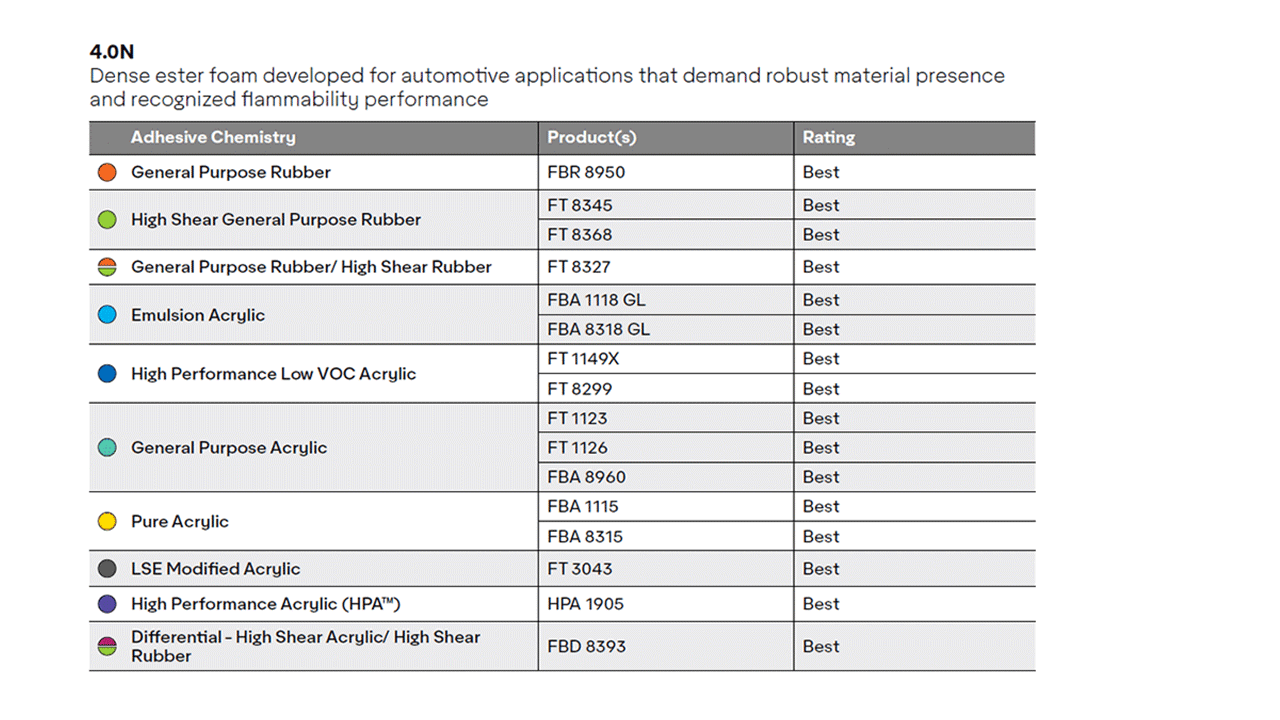
Good = Likely to achieve foam tear with heated lamination.
Better = May achieve foam tear without heat lamination.
Best = Likely to achieve foam tear at room temperature